
Quantitative vs. Qualitative Fit Testing: What Employers Need to Know
A worker shows up for his shift at an industrial site near Bonnyville. He's wearing the respirator he was issued a few months ago. The straps are tight, the mask feels secure, and everything seems fine.
Then he enters an area with airborne contaminants.
The problem?
A respirator that feels like it fits isn't always providing a proper seal.
We've seen it happen. Someone passes a basic fit check, assumes they're protected, and never realizes there's a small leak around the mask. Not enough to notice. Just enough to create a risk.
That's why respirator fit testing matters. And more specifically, why many employers are moving toward Quantitative Fit Testing rather than relying solely on traditional qualitative methods.
If you're responsible for worker safety, understanding the difference between these two testing methods is important. It can affect compliance, worker protection, and ultimately the health of your crew.

What's the Difference Between Quantitative and Qualitative Fit Testing?
The short answer?
Both methods are designed to determine whether a respirator fits properly, but they measure fit very differently.
Qualitative Fit Testing
Qualitative fit testing relies on the wearer's senses.
During the test, the worker wears a respirator while being exposed to a harmless testing agent. Depending on the method, this may involve a sweet taste, bitter taste, or other detectable substance.
If the worker can taste or smell the testing agent, the respirator fit has failed.
If they can't detect it, they pass.
It's a relatively simple process and has been used for years across many industries.
Quantitative Fit Testing
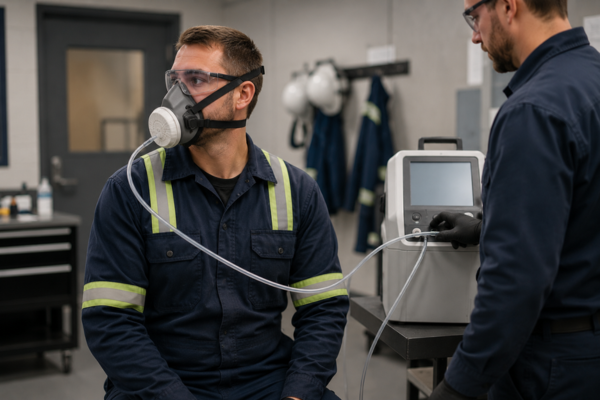
Quantitative Fit Testing uses specialized equipment to measure the actual amount of leakage into the respirator.
Instead of relying on taste or smell, the testing device calculates a numerical fit factor and provides objective data showing how well the respirator seals against the face.
No guessing.
No opinions.
Just measurable results.
That's one reason many employers prefer quantitative testing for higher-risk work environments.
Why Are More Employers Choosing Quantitative Fit Testing?
A lot of safety decisions come down to reducing uncertainty.
And that's really where Quantitative Fit Testing shines.
With qualitative testing, results depend on the worker's ability to detect a taste or smell.
Some people are more sensitive than others.
Some workers may have congestion, allergies, or other conditions that affect their ability to detect the testing agent.
Others simply aren't sure what they're supposed to be noticing.
We've heard comments like:
"I think I tasted something."
"Maybe?"
That's not exactly the level of confidence most employers are looking for.
Quantitative testing removes much of that uncertainty by providing measurable data.
The equipment tells you whether the respirator passed or failed.
Simple.
What Does Quantitative Fit Testing Measure?
During Quantitative Fit Testing, specialized equipment measures the concentration of particles outside the respirator compared to the concentration inside.
The difference creates a fit factor score.
Higher fit factor scores indicate a better seal and better protection.
The worker performs a series of movements during testing, including:
Normal breathing
Deep breathing
Turning their head side to side
Looking up and down
Talking
Bending over
These movements simulate real working conditions.
After all, workers don't stand perfectly still all day.
The respirator needs to maintain a seal while the person is moving, speaking, and performing tasks.
Is Quantitative Fit Testing Required?
Requirements can vary depending on workplace hazards, respirator type, and company policies.
However, many industries increasingly recognize Quantitative Fit Testing as the preferred method because of its accuracy.
In Alberta, industries such as:
Oil and gas
Industrial maintenance
Construction
Manufacturing
Utilities
Turnaround and shutdown projects
often require documented respirator fit testing as part of their respiratory protection programs.
Some employers specifically request quantitative testing because it provides detailed records and measurable results.
What Happens if Respirators Don't Fit Properly?
This is where things get serious.
A respirator can only protect a worker if it seals correctly against the face.
Even a small leak can allow contaminants to bypass the filter system.
Depending on the work environment, that could expose workers to:
Dust
Silica
Welding fumes
Chemical vapours
Airborne contaminants
Hazardous particles
Workers often assume they'll immediately notice a poor fit.
Not necessarily.
Small leaks aren't always obvious.
That's why relying solely on comfort or appearance isn't enough.
A mask can feel secure and still fail.
Common Reasons Workers Fail Fit Tests
People are often surprised by what affects respirator fit.
Some common issues include:
Facial Hair
This is probably the biggest one.
Even short stubble can interfere with the seal between the respirator and the skin.
We've seen workers shave in the morning and pass easily after failing the day before.
Incorrect Respirator Size
Not every face shape works with every respirator model.
A respirator that fits one worker perfectly may not fit another worker at all.
Weight Changes
Significant weight gain or loss can alter facial structure enough to affect fit.
Dental Work or Facial Changes
Major dental procedures, facial injuries, or surgeries can sometimes impact how a respirator seals.
Why Local Employers in Bonnyville Are Paying More Attention to Respirator Fit
Bonnyville's workforce often operates in environments where respiratory protection isn't optional.
Oilfield sites.
Industrial facilities.
Maintenance shutdowns.
Construction projects.
Turnarounds.
Many workers are exposed to dust, fumes, and airborne hazards regularly.
The stakes are simply too high to assume a respirator fits properly.
More employers are recognizing that investing in accurate fit testing today can help avoid health concerns, compliance issues, and workplace incidents down the road.
It's a small step that makes a big difference.

Should You Switch to Quantitative Fit Testing?
For many employers, the answer is yes.
If your workers rely on respiratory protection, Quantitative Fit Testing provides a more accurate and objective assessment than traditional qualitative methods.
It helps ensure workers are properly protected and gives employers confidence that their respiratory protection program is working as intended.
Most importantly, it removes a lot of the guesswork.
And safety shouldn't involve guesswork.
Frequently Asked Questions
-
Most individual fit tests can be completed fairly quickly, often within 15 to 30 minutes. The exact timing depends on the respirator type and whether multiple masks need to be tested.
-
Most employers require fit testing annually, although additional testing may be needed if a worker experiences facial changes, weight fluctuations, or switches respirator models.
-
For tight-fitting respirators, facial hair that interferes with the seal is generally not permitted. Even small amounts of stubble can cause a failed fit test.
-
Yes. Quantitative Fit Testing provides measurable data and objective results rather than relying on the worker's sense of taste or smell, making it the more precise testing method.
Book Quantitative Fit Testing in Bonnyville
Respirators are one of the most important pieces of personal protective equipment many workers use. But they're only effective when they fit properly.
At Safety Buzz Campus, we provide professional Quantitative Fit Testing services for employers and workers throughout Bonnyville and the surrounding area. Our team helps ensure respirators fit correctly, meet compliance requirements, and provide the protection workers need on the job.
If your crew requires respirator fit testing, contact Safety Buzz Campus today to schedule testing or learn more about your options.