
Why Is Quantitative Fit Testing Essential for Respiratory Protection Compliance?
A worker finishes his safety orientation, grabs his respirator, and heads into a dusty work area. Maybe it's a shutdown project. Maybe it's maintenance work in a plant. Maybe it's a construction site outside Medicine Hat and Cypress County.
The respirator feels comfortable.
The straps seem tight.
Everything looks fine.
But here's the problem.
A respirator that looks like it fits and a respirator that actually fits are two very different things.
That's where Quantitative Fit Testing comes in.
If workers are relying on respirators to protect them from dust, fumes, vapours, or airborne contaminants, employers need more than assumptions. They need proof that the equipment is doing its job.
And from both a safety and compliance standpoint, that's exactly what quantitative testing provides.

Why Does Respirator Fit Matter So Much?
A respirator is only effective if it forms a proper seal against the worker's face.
Sounds simple enough.
But small gaps around the mask can allow contaminated air to bypass the filters and enter the breathing zone.
The worker may not notice it.
The supervisor may not notice it.
The respirator might even feel comfortable.
Meanwhile, harmful particles could still be getting through.
That's one reason respiratory protection programs require fit testing. The goal isn't just to issue respirators. It's to ensure they actually protect workers.
What Is Quantitative Fit Testing?
Quantitative Fit Testing is a scientific method used to measure how well a respirator seals against a person's face.
Unlike traditional qualitative testing, which relies on a worker's ability to taste or smell a testing agent, quantitative testing uses specialized equipment to measure leakage directly.
The equipment compares the concentration of particles outside the respirator to the concentration inside the respirator.
The result is a numerical fit factor score.
It's objective.
It's measurable.
And it removes a lot of guesswork from the process.
Why Are Employers Moving Toward Quantitative Fit Testing?
A lot of safety programs have evolved over the years.
Respiratory protection is no different.
Many employers throughout Alberta are choosing Quantitative Fit Testing because it provides more reliable data and stronger documentation.
Think about it this way.
If a worker says they can't taste a test solution during a qualitative fit test, does that automatically mean the respirator fits perfectly?
Not necessarily.
Some people have difficulty detecting taste or smell.
Others may be congested or recovering from an illness.
With quantitative testing, the equipment provides measurable results rather than relying on human perception.
For many employers, that's a significant advantage.
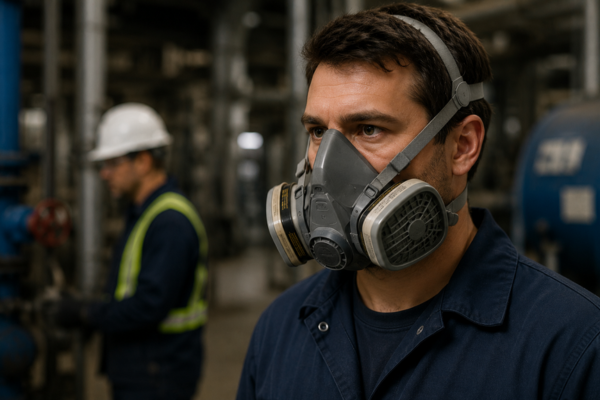
What Types of Work Require Respiratory Protection?
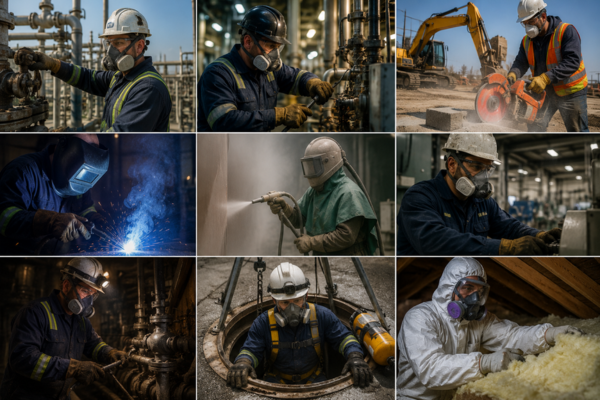
Around Medicine Hat and Cypress County and throughout northeastern Alberta, workers encounter airborne hazards in a variety of industries.
Some common examples include:
Oil and gas operations
Industrial maintenance
Construction projects
Welding activities
Sandblasting
Manufacturing facilities
Turnaround and shutdown work
Confined space entry
In these environments, workers may be exposed to:
Silica dust
Welding fumes
Chemical vapours
Asbestos
Fibreglass particles
Airborne contaminants
A properly fitted respirator helps reduce those risks.
An improperly fitted respirator may provide far less protection than expected.
What Does Quantitative Fit Testing Actually Measure?
This is where many people get curious.
During testing, the worker wears their respirator while connected to specialized testing equipment.
The worker performs a series of movements, including:
Normal breathing
Deep breathing
Turning their head side to side
Looking up and down
Talking
Bending over
These exercises simulate actual working conditions.
Because let's be honest.
Nobody stands perfectly still on a job site.
Workers move constantly.
The respirator needs to maintain a proper seal through all of those movements.
The testing equipment measures particle leakage throughout the process and calculates an overall fit factor score.
If the respirator doesn't meet the required standard, adjustments or alternative respirator models may be necessary.
What Can Happen If Respirators Don't Fit Properly?
The risks are more serious than many people realize.
Exposure to airborne contaminants isn't always immediately noticeable.
Workers may not feel symptoms right away.
The effects can develop over time.
Poor respirator fit can potentially contribute to:
Respiratory irritation
Long-term lung damage
Occupational illnesses
Increased exposure to hazardous substances
Regulatory compliance issues
For employers, there's also the possibility of investigations, penalties, and liability concerns if respiratory protection programs aren't properly maintained.
That's why fit testing shouldn't be viewed as just another safety form to complete.
It's a critical part of protecting workers.
Common Reasons Workers Fail Fit Tests
A failed fit test doesn't necessarily mean there's a problem with the worker.
Sometimes it's simply a matter of finding the right respirator.
Common reasons for failed tests include:
Facial Hair
Even short stubble can interfere with the respirator seal.
This is probably the most common issue we see.
Incorrect Respirator Size
Not every respirator fits every face shape.
Finding the right model is important.
Weight Changes
Significant changes in weight can alter facial structure enough to affect respirator fit.
Damaged Equipment
Worn straps, damaged facepieces, or aging respirators may no longer provide an adequate seal.
Why Compliance Matters
Employers have legal responsibilities when workers rely on respiratory protection.
Part of that responsibility involves ensuring respirators are properly selected, maintained, and fitted.
Documentation matters.
Training matters.
Fit testing matters.
A strong respiratory protection program demonstrates that an employer has taken reasonable steps to protect workers from airborne hazards.
More importantly, it helps reduce the risk of someone being injured or becoming ill because their equipment wasn't functioning properly.
How Often Should Quantitative Fit Testing Be Done?
Many employers conduct fit testing annually.
Additional testing may be required if:
The worker changes respirator models
Significant weight changes occur
Facial surgery or dental work affects facial structure
Respiratory protection requirements change
Annual testing also provides an opportunity to confirm that equipment remains effective and workers continue using it properly.
Why More Employers in Medicine Hat and Cypress County Are Choosing Quantitative Testing
Medicine Hat and Cypress County's workforce often operates in demanding environments where respiratory protection is essential.
Industrial sites.
Oilfield facilities.
Maintenance shutdowns.
Construction projects.
In these settings, employers increasingly want accurate, measurable evidence that respirators fit properly.
Quantitative Fit Testing provides that confidence.
It helps protect workers while supporting regulatory compliance and safety program requirements.
That's a combination most employers can appreciate.
Frequently Asked Questions
-
Most fit tests take approximately 15 to 30 minutes per person. The exact time depends on the respirator type and whether multiple masks need to be tested.
-
Both methods have their place, but quantitative testing provides objective measurements rather than relying on a person's ability to taste or smell a testing agent.
-
For tight-fitting respirators, facial hair that interferes with the seal is generally not permitted. Even light stubble can cause a fit test failure.
-
In many respiratory protection programs, annual fit testing is required. Additional testing may also be needed if facial features or respirator types change.
Protect Your Workers with Quantitative Fit Testing
Respirators are often the last line of defence against airborne hazards. That's a responsibility employers shouldn't take lightly.
At Safety Buzz Campus, we provide professional Quantitative Fit Testing services for employers and workers throughout Medicine Hat and Cypress County and the surrounding area. Our team helps ensure respirators fit correctly, workers stay protected, and respiratory protection programs remain compliant.
If your organization requires respirator fit testing or you're reviewing your respiratory protection program, contact Safety Buzz Campus today to learn more or schedule testing.